Chin Surgery
Mentoplasty | Genioplasty
A well-proportioned chin creates facial harmony and balance. Chin surgery, also known as mentoplasty or genioplasty, encompasses a range of procedures that improve the shape, size or projection of the chin. This can be achieved by using a synthetic implant or by repositioning or reshaping the underlying bone. Chin surgery is often performed on its own, but it can also be part of a comprehensive approach to profile enhancement.
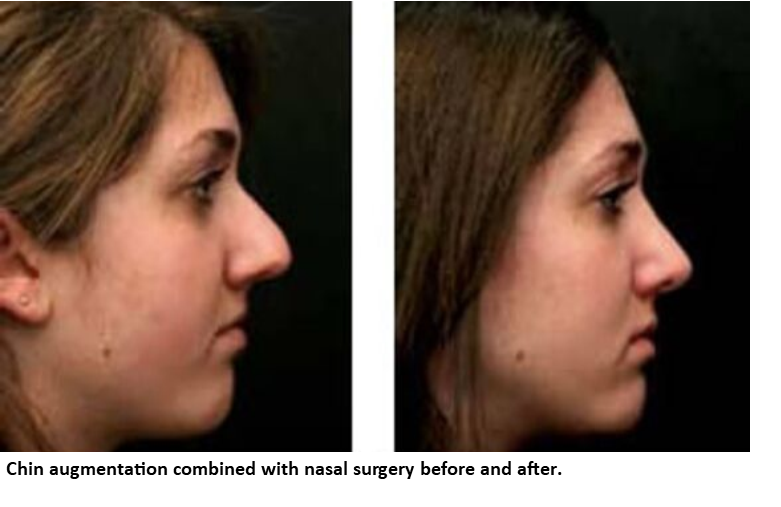
I was surprised when my facial plastic surgeon suggested a chin implant when I went in for a rhinoplasty. I never thought that a weak chin can make your nose appear more prominent.
— jeanines., age 21

What Is Chin Surgery?
Chin surgery improves the chin’s shape and proportion relative to other facial features. While many people focus on their nose, eyes, forehead or signs of aging when evaluating their appearance, the chin is a critical anchor point for facial aesthetics.
A well-defined chin gives balance to the face and has a major impact on one’s profile. For example, an underdeveloped or "weak" chin can make other features appear more prominent than they are. Surgeons who specialize in rhinoplasty (nose surgery) are often the first to suggest that altering the chin may enhance a profile as much as rhinoplasty. Chin surgery and nose surgery are often performed together to maximize facial harmony.
A chin surgery procedure typically involves placing an implant to augment the chin's structure or modifying the chin bone (mandible) to achieve the desired shape and size. The appropriate technique depends on the patient's anatomy and goals.
What Can Chin Surgery Do?
In the hands of a skilled facial plastic surgeon, chin surgery can refine your facial proportions and enhance the definition of your lower face. The procedure can:
- Strengthen a weak or recessed chin
- Refine an overly prominent or elongated chin
- Improve facial balance, particularly in relation to the nose, forehead and jawline
- Create a more sculpted or angular jawline
- Correct asymmetry in the lower face
- Improve definition between the face and neck
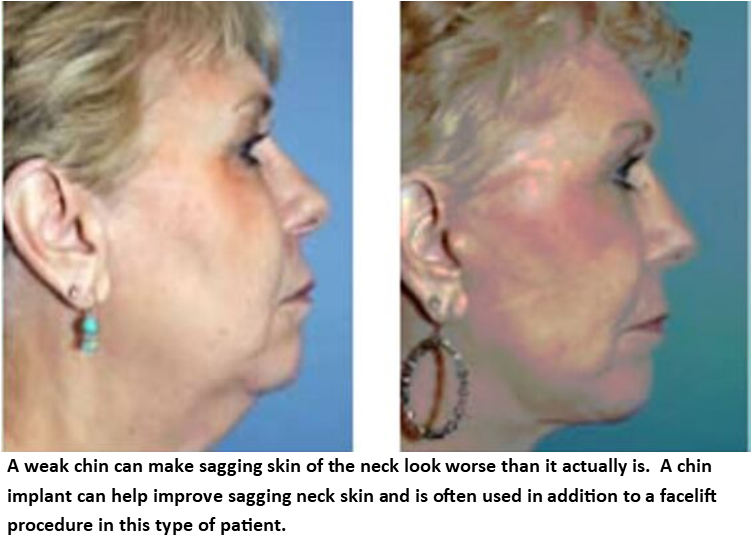
- Reduce the appearance of a double chin or "turkey neck"
- Complement other procedures, such as rhinoplasty or facelift surgery
Because the chin is a structural anchor for the entire face, changes to this area often produce significant aesthetic differences even when the physical adjustments are minimal. The results are subtle yet impactful.
What Doesn't Chin Surgery Do?
While chin surgery offers many benefits for improving facial balance, it is important to understand its focus and limitations. Chin surgery does not:
- Remove excess fat — this is better addressed surgically with liposuction or nonsurgically with Kybella
- Treat wrinkles or sagging skin — these concerns may benefit from surgical procedures like a facelift or neck lift or nonsurgical treatments like chemical peels or laser resurfacing
- Change the structure of the nose — although it can change how the nose is perceived, chin surgery does not directly alter the nose
- Improve jaw function or bite alignment — patients with functional issues may require orthognathic (jaw) surgery, which addresses the position of the upper and lower jaws
A consultation with a facial plastic surgeon will help clarify which procedure, or combination of procedures, is best suited to your goals.
Am I a Good Candidate for Chin Surgery?
Chin surgery may be right for you if you’re seeking a more balanced and proportionate facial appearance, especially in profile. You may be a good candidate if you:
- Have a small, recessed or under-projected chin
- Have an excessively prominent or elongated chin
- Desire more definition or symmetry in your lower face
- Are in good physical and emotional health
- Have reached physical maturity with fully developed facial bones
- Have realistic expectations about what the procedure can achieve
- Are not experiencing any untreated dental or bite alignment issues
- Do not smoke, or are willing to quit before and after surgery
Your facial plastic surgeon will carefully assess your facial structure, including the relationship between your chin and other facial features. This comprehensive analysis helps determine the degree of correction needed and whether chin surgery alone will achieve your desired outcome.
How Can I Find a Qualified Facial Plastic Surgeon Near Me?
When you choose a facial plastic surgeon, particularly one certified by the American Board of Facial Plastic and Reconstructive Surgery (ABFPRS), you’re choosing a professional who has demonstrated the highest level of expertise in facial surgery. These surgeons are equipped to perform chin surgery with a nuanced understanding of how subtle changes to the chin can affect the entire face.
Membership in the American Academy of Facial Plastic and Reconstructive Surgery (AAFPRS) signifies a commitment to the highest standards of patient care, ethical conduct, continuing education and surgical excellence specifically within facial plastic surgery.
The simplest way to find these highly qualified specialists is through the AAFPRS surgeon locator tool.
FIND A FACIAL PLASTIC SURGEON NOW
What Should I Expect During My Chin Surgery Consultation?
A consultation with a board-certified facial plastic surgeon is the first step on your chin surgery journey. This appointment is your dedicated time to discuss your goals, learn about the procedure and ask any questions you may have.
Here’s what you can expect:
- Discussion of Your Goals: Be prepared to talk about what concerns you about your chin and the outcomes you hope to achieve.
- Medical History Review: Your surgeon needs a complete picture of your health. This includes discussing past surgeries, any current or past medical conditions, allergies, and all medications or supplements you currently take.
- Facial Examination: The surgeon will assess your facial structure, skin quality, facial proportions and potentially your bite. They may take photographs from various angles for planning and reference.
- Exploration of Your Chin Surgery Options: The surgeon will determine if you are a good candidate and discuss the most suitable surgical techniques.
- Realistic Expectations: You must consider both the benefits and limitations of chin surgery. Your surgeon will discuss achievable results and potential risks so you can make an educated decision.
- Process Overview: You'll learn about preparing for surgery, the type of anesthesia used, where incisions are typically placed and what to expect during the healing period.
- Cost and Financing: The surgeon's office will provide a detailed breakdown of the costs associated with chin surgery and discuss any available payment or financing options.
- Answering Your Questions: It’s a good idea to come to the consultation with a list of questions for your surgeon. This is your opportunity to address anything you need clarification on.
Consider scheduling consultations with more than one board-certified facial plastic surgeon before making a decision. By the end of this process, you should feel confident in your choices and informed about your next steps.
What Are the Different Types of Chin Surgery?
Chin surgery is customized to each patient's facial anatomy and goals. Your facial plastic surgeon will recommend the most appropriate approach for you during your consultation.
Chin Augmentation With Implants
Chin augmentation using an implant is the most common surgical technique for enhancing a recessed or underdeveloped chin. A small, biocompatible implant is placed over the chin bone to improve its projection and contour.
Chin implants are made of silicone or another medical-grade material. They come in a variety of shapes and sizes so your surgeon can choose the option that best complements your facial structure.
The procedure is typically performed through a small incision under the chin or inside the mouth, leaving minimal or no visible scarring.
Sliding Genioplasty
Sliding genioplasty is a more advanced technique that involves cutting and repositioning the patient’s own chin bone. Instead of using an implant, the surgeon gently moves the bone forward, backward, upward or downward depending on the desired outcome. The repositioned bone is then secured with plates and screws.
This technique allows for a high level of precision and customization. It’s particularly beneficial for patients who want to avoid implants or who need significant changes in both horizontal and vertical chin dimensions.
Because it involves modification of the bone, sliding genioplasty usually requires a longer recovery time than implant-based augmentation.
Chin Reduction
Chin reduction surgery is performed to decrease the size of an overly large or protruding chin. The procedure involves removing or reshaping portions of the chin bone to bring it into better proportion with the rest of the face.
Depending on the patient’s needs, the surgeon may reduce horizontal projection, vertical length or both. Incisions are typically made inside the mouth to avoid external scarring.
How Should I Prepare for Chin Surgery?
Your surgeon will provide personalized preoperative instructions based on your medical history and the type of chin surgery you're having. However, there are some general guidelines that most patients can expect to follow:
- Stop smoking well in advance of surgery, as smoking can impair healing and increase the risk of complications
- Avoid certain medications or supplements that can increase bleeding, such as aspirin, NSAIDs and vitamin E
- Schedule time off from work and social activities to allow for rest and recovery
- Arrange transportation and support for the day of surgery—a trusted adult should drive you home and stay with you for the first 24 hours
- Complete any medical tests or lab work requested by your surgeon
- Follow eating and drinking instructions before surgery, especially if you’re receiving general anesthesia
- Stock up on recovery supplies such as ice packs, soft foods, prescribed medications and extra pillows to keep your head elevated
- Set up a comfortable recovery space at home where you can rest without strain or interruption
Taking the time to prepare your body, mind and environment can make a significant difference in your recovery experience and outcome.
What Are the Steps of Chin Surgery?
Anesthesia
Chin surgery is performed under general anesthesia (where you are fully asleep) or local anesthesia with intravenous sedation (where you are awake but relaxed and insensitive to pain). Your facial plastic surgeon will discuss the best option for you.
Incisions
The placement of incisions depends on the technique being used. Chin surgery incisions are usually made inside the mouth or under the chin so there is minimal or no visible scarring.
Adjustments
Once the incisions are made, the surgeon performs the planned modifications:
- For chin implants, the surgeon creates a pocket in the tissue directly over the chin bone and inserts the implant
- In sliding genioplasty or chin reduction, the surgeon uses specialized instruments to remove or reposition sections of bone
Incision Closure
Once the reshaping is complete and the implant or bone is stable, the surgeon closes the incisions. Incisions inside the mouth are usually closed with dissolvable sutures, while those under the chin may use removable sutures or dissolvable ones.
Initial Recovery
A light dressing or surgical tape may be applied to the chin area. You will then transfer to a recovery area for monitoring as the anesthesia wears off before being discharged home (typically the same day).
What Should I Expect After Chin Surgery?
Immediately after surgery, your surgeon will apply a dressing or compression garment to support your chin and minimize swelling. This dressing typically remains in place for two to three days.
You may experience mild to moderate tenderness, a tight or stretched sensation, and some bruising or numbness in your lower face. These effects are normal and usually subside within a week. Your surgeon will prescribe medications to manage the postoperative discomfort.
To support healing, your surgeon may recommend:
- A liquid or soft food diet for the first few days
- Keeping your head elevated, including while sleeping, to reduce swelling
- Avoiding vigorous activity, heavy lifting and contact sports for at least a few weeks
Your surgeon will advise when work and normal, nonstrenuous activity can be resumed, often around the 10-day mark. By approximately six weeks, most of the noticeable swelling should be gone. Minor residual swelling can take several months to disappear completely.
What Results Can Be Achieved With Chin Surgery?
Chin surgery can dramatically improve your profile and facial balance, as well as the definition of your jawline. While individual outcomes vary, the results of chin surgery may include:
- Correction of a recessed or "weak" chin
- A stronger, more defined chin and jawline contour
- Softening of an overly prominent or elongated chin
- Enhanced harmony between the chin and other facial features, especially the nose
- Improved symmetry in the lower face
Scarring is typically minimal. Incisions are hidden inside the mouth or placed discreetly under the chin, where they are usually imperceptible.
To see examples of chin surgery results, you can view patient galleries or consult with a facial plastic surgeon. Your surgeon can show you before-and-after photographs of their patients who have undergone similar procedures to help you visualize the potential outcomes.
Chin Surgery Before & After Images
VIEW THE GALLERY
Chin Surgery FAQs
Will chin surgery fix my double chin?
Chin surgery may improve the appearance of a double chin when the issue is caused by a recessed or under-projected chin. Enhancing the chin’s projection can give the jawline more definition and reduce the visual impact of fullness beneath the chin.
However, if your double chin is due to excess fat or loose skin, procedures such as liposuction or a neck lift may be more appropriate. They can often be performed in conjunction with chin surgery for a more comprehensive result.
How long does chin surgery take?
The duration of the procedure varies. Simple procedures can take less than an hour, while more complex procedures can take up to three hours. If combined with other procedures, such as rhinoplasty or neck contouring, the total surgical time will be longer.
What are chin implants made of?
Most chin implants are made of biocompatible materials, such as solid silicone or porous polyethylene. These materials have been used in facial plastic surgery for many years and are well-tolerated by the body. Chin implants do not feel soft like breast implants. They are firm and designed to mimic natural bone.
Will my chin look natural after surgery?
A well-performed chin surgery should enhance your features subtly and look natural. The goal is not to create a “perfect” chin, but one that harmonizes with your unique facial features and proportions.
What are the risks of chin surgery?
Although serious complications are uncommon when chin surgery performed by a qualified surgeon, there are risks with any surgical procedure. These may include:
- Infection
- Bleeding
- Excessive swelling or bruising
- Visible scarring
- Asymmetry
- Changes in skin sensation (temporary or permanent)
- Damage to deeper structures
- Implant-specific issues like shifting, visibility or rejection
How much does chin surgery cost?
The cost of chin surgery in the U.S. generally ranges from $3,000 to $8,000. The cost can be higher in major metropolitan areas or for complex cases. Your surgeon’s office can provide a personalized quote and discuss financing options if needed.
Is chin surgery ever covered by health insurance?
Chin surgery performed to improve appearance is generally not covered by health insurance. However, if the surgery is for reconstructive purposes (for example, to correct deformities resulting from trauma or congenital conditions), insurance coverage may be possible. Check directly with your insurance provider.
Is chin surgery permanent?
Chin implants are designed to be permanent fixtures. They do not have an expiration date. However, complications or damage could necessitate removal or replacement. Many patients keep their chin implants for life without issue.
Bone modifications are permanent. While your face will continue to age naturally, the improved chin structure will remain a stable foundation for your appearance.
What procedures can be combined with chin surgery?
Chin surgery is very commonly performed in conjunction with other facial procedures. Pairing it with rhinoplasty is especially popular due to the aesthetic relationship between the chin and nose. It can also be effectively combined with procedures like neck liposuction, neck lift, facelift or cheek augmentation.
Can I get nonsurgical chin augmentation with fillers instead of surgery?
Chin fillers can provide temporary improvement in projection and shape with minimal downtime. However, the results are not permanent. Most fillers last six to 18 months, with some types lasting longer. The results are usually less dramatic than surgical outcomes. Dermal fillers can be a good option for those who want to “preview” their results or are not ready for a permanent change.
Trust Your Face to a Facial Plastic Surgeon
Find a Facial Plastic Surgeon Near You
Facial plastic surgeons are uniquely qualified to perform procedures like chin augmentation, sliding genioplasty and chin reduction. Their focused expertise allows them to deliver refined, natural-looking results that enhance—not overpower—your features.
The AAFPRS is the leading professional association for facial plastic surgeons in the United States. All AAFPRS members are board certified and committed to the highest standards of patient care, safety and artistry. Use the AAFPRS Find a Surgeon tool to find a board-certified facial plastic surgeon near you.
The shape of the chin has a remarkable influence on the overall appearance of the face and neck. Improving the shape of the chin can have positive effects on other areas that you might not anticipate.